Not just TV drama - The real Peaky Blinders
Long before Tommy Shelby appeared on screen, the real Peaky Blinders were already part of Birmingham legend.
They weren’t polished anti heroes with slow motion entrances and cinematic one liners. They were young street gang members from some of the city’s toughest neighbourhoods, and they grew out of the same Birmingham that built factories, foundries, workshops and whole communities on hard work and poor pay.
That’s part of why the story still sticks. Strip away the TV version and you’re left with something recognisably Brummie. Pride, toughness, style, local loyalty, and a determination to make something of yourself in a hard city.
Who were the real Peaky Blinders?
The real Peaky Blinders first appeared in the late 19th century, when Birmingham was expanding fast. Industry was booming, but so were overcrowding, poverty and street crime.
They weren’t a single criminal empire running the whole city. They were one of several gangs operating in Birmingham, especially around Small Heath, with influence stretching into places like Aston, Cheapside and nearby districts. They were mainly made up of young working class men, and some were still in their teens.
What made them stand out was not just violence, though there was plenty of that. It was the mix of swagger, reputation and appearance. These were lads who wanted to be seen.
They were known for street fights, robberies, illegal gambling and defending their patch. They also had a reputation for taking on rivals, intimidating locals and clashing with police. In a city divided by class and opportunity, gangs offered some young men money, status and protection they were not getting elsewhere.
Why were they called the Peaky Blinders?
This is where history and myth start to blur.
The best known story says they stitched razor blades into the peaks of their caps and used them as weapons. It is a great image, which is probably why it survives, but historians have long been sceptical. Disposable razor blades were still relatively expensive when the original Peaky Blinders were active, and there is no solid evidence that gang members wore them in their hats.
The more believable explanation is much less theatrical. ‘Peaky’ likely referred to the peaked caps they wore. ‘Blinder’ was local slang for someone who looked smart, flashy or impressive.
Put that together and the name suggests something closer to a sharply dressed street lad than a secret weapon hidden in a hat.
That actually fits Birmingham better. The real story is less about gimmicks and more about image, status and how people carried themselves.
The Birmingham they came from
To understand the Peaky Blinders, you have to look at the city around them.
Birmingham at the turn of the 20th century was a place of noise, smoke and graft. It was full of factories, metalwork, labouring jobs and back-to-back housing. Thousands of families lived in cramped conditions, often with little privacy, low wages and few chances to move up.
For a lot of young people, life was narrow. School ended early. Work was hard to find or badly paid. Casual labour came and went. Some families were just about getting by, while others were one missed wage packet away from real trouble.
That environment shaped the gangs. They were not criminal masterminds in the modern sense. They were products of the streets around them, trying to claim power in places where power was usually out of reach.
Birmingham was a city built by workers, but not everyone benefited equally from the work. The Peaky Blinders grew in the gap between industry and poverty.
Style mattered
One thing the TV series gets right is that appearance mattered.
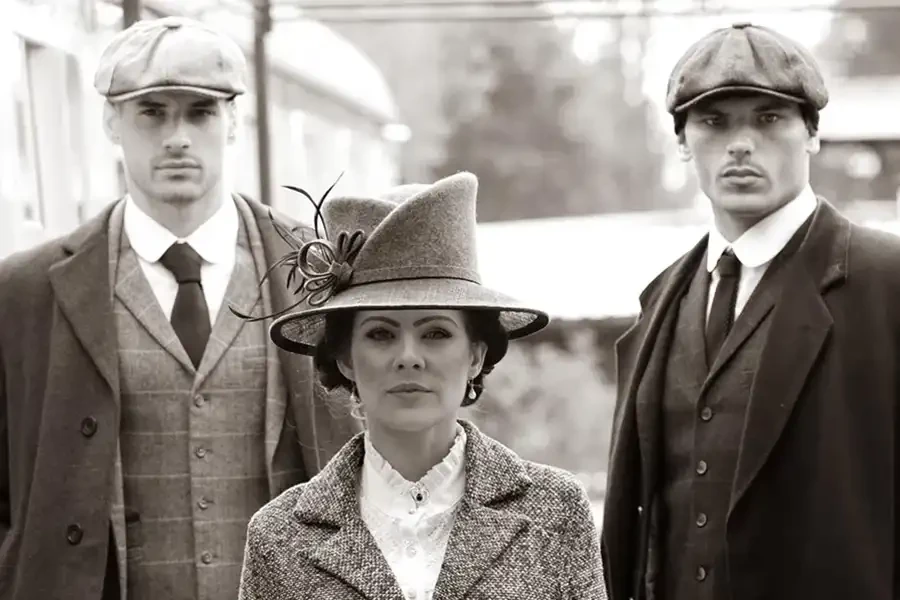
The real Peaky Blinders were known for dressing well. Even if money was tight, they made an effort. Contemporary accounts describe gang members wearing bell-bottom trousers, smart jackets, silk scarves, sturdy boots and flat caps.
That was not accidental.
In poorer districts, looking sharp could be a way of commanding attention. Clothes gave you presence. They signalled confidence, even when your circumstances gave you very little else. In rough areas, style could be a form of intimidation, but it was also a form of self-respect.
That idea still feels familiar in Birmingham. This has always been a city where people take pride in presentation, whether that means turning up smart for work, dressing well on a night out, or carrying yourself properly no matter what life throws at you.
They were feared, but not romantic heroes
It is easy to turn gangs into folklore, especially once television gets involved. The truth is less flattering.
The Peaky Blinders were not lovable rogues. They used violence, ran protection rackets, controlled gambling and made life harder for plenty of ordinary people. If they became local legends, it was not because they were saints. It was because they were visible, feared and hard to ignore.
Like many gangs, they also lived by their own loyalties. They looked after their own, stood by their mates and defended territory fiercely. In some streets, that could earn a kind of rough respect. But that should not be confused with public service. They were part of the hardship of Birmingham life, not a solution to it.
What happened to them?
By the early 20th century, the original Peaky Blinders were already fading.
They were overtaken by larger and more organised groups, including the Birmingham Gang associated with Billy Kimber. Criminal activity became more structured, police tactics improved, and the old street gang model began to lose ground.
Then came the First World War, which changed everything. Many young men who might once have drifted into gang life were pulled into military service. When they returned, Birmingham was changing again. So was its underworld.
The Peaky Blinders did not disappear in one dramatic moment. They were gradually absorbed into a different kind of criminal world, and the name slipped from living reality into local memory.
What the TV show gets right and wrong
The BBC series has done more than anything else to turn the Peaky Blinders into an international brand, but the real history is much messier than the version on screen.
Tommy Shelby was fictional. So was the Shelby family business empire as the show presents it. The timeline was reshaped, the gangs were glamorised, and real figures were folded into a more dramatic story.
But the series did not invent everything.
It is true that Birmingham had violent street gangs. It is true that illegal betting was a big part of local criminal life. It is true that men like Billy Kimber existed. And it is true that the city’s industrial districts produced a hard-edged street culture where reputation mattered.
So the show is not history, but it does borrow from real Birmingham conditions, real local characters and a very real atmosphere.
The women were tougher than history often admits
Gang stories often focus on men, but women carried huge weight in Birmingham’s working-class communities.
They kept households running, stretched money, raised families and held things together in cramped, difficult conditions. Some were closely involved in betting operations or family finances. Others simply had to be resilient enough to survive in the same harsh environment as everyone else.
That is one area where the TV drama gets close to the truth. Women in these communities were rarely passive observers. Even when they were not front and centre, they were often the people keeping life from falling apart.
Why this story still matters in Birmingham
The reason people are still drawn to the Peaky Blinders is not just the violence or the fashion. It is that the story taps into something bigger about Birmingham.
This is a city shaped by work. By manufacturing, trade, skill, resilience and reinvention. It has always had people trying to get on, get by, or carve out something better for themselves. Sometimes that drive built honest livelihoods. Sometimes it spilled into crime. Either way, it came from the same streets.
That is why the Peaky Blinders remain part of Birmingham history, even if the television version has blurred the facts. They reflect a city that has never been soft, never been one-note, and never been easy to sum up from the outside.
Modern Birmingham is very different, of course. The factories are not the same, the economy has changed, and the city keeps evolving. But the sense of hustle is still there. So is the pride. So is the idea that where you start does not have to define where you finish.
For people looking at jobs in Birmingham today, that matters. Birmingham has always been a city of workers, from metal trades and workshops to offices, retail, logistics, construction, care and tech. The setting has changed, but the instinct to build a future here has not.
More than a TV legend
The real Peaky Blinders were not masterminds in tailored suits plotting empire from smoky rooms. They were young Birmingham men shaped by poverty, ambition, local identity and the pressures of the city around them.
What survives is not just the myth, but the setting that produced them.
That is the part worth remembering. Not the razor blades. Not the slow-motion swagger. The real Birmingham underneath it all.
A hard city. A proud city. A city built by people who kept going.
And that story, more than any TV script, still belongs to Brum.